Bus and coach dimensions: EU and US length, width and height rules
In the EU a bus may be 13.50 m long on two axles, 15.00 m on more and 18.75 m articulated, 2.55 m wide and 4.00 m high. The US rule, and what 38 bus and coach ranges measure.
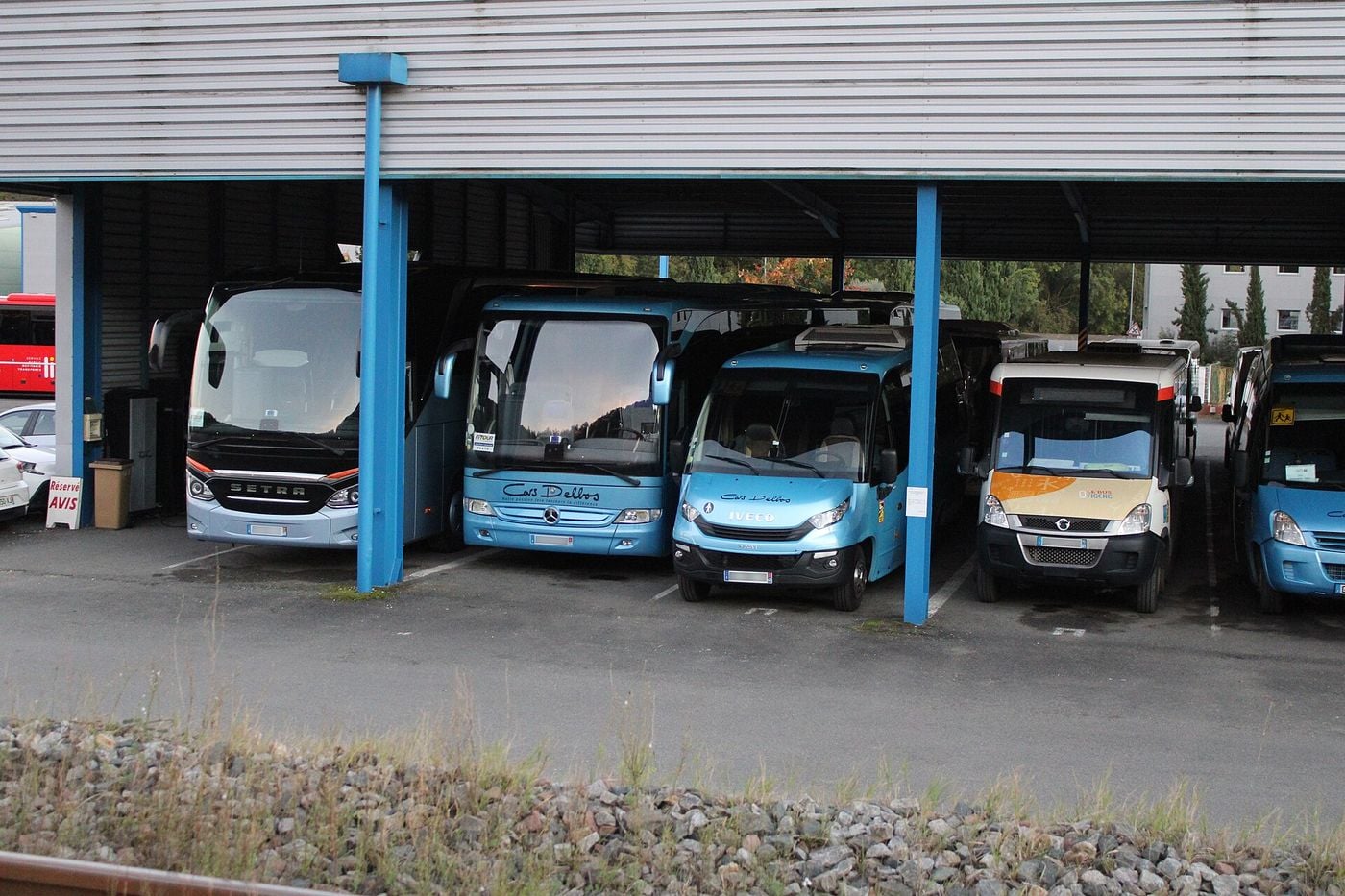
In the European Union, Annex I of Council Directive 96/53/EC limits a bus to 13.50 m in length on two axles and 15.00 m on more than two, and an articulated bus or a bus with a trailer to 18.75 m; the maximum width is 2.55 m and the maximum height 4.00 m. The bus lengths come from Directive 2002/7/EC, in force since 9 March 2002, which Member States had to transpose by 9 March 2004. Length and width bind national as well as international traffic, while height is among the points a Member State may relax for national passenger transport. In the United States the federal rule sets a floor for the States: none may limit a bus on the National Network to less than 45 feet (13.72 m), and the width limit there is 102 inches (2.6 m). The makers’ published lengths for the 38 bus and coach ranges in the table below run from 5,845 mm to 21 m.
Status as at 28 October 2026. Read on that day: Directive 96/53/EC as adopted in 1996, Directive 2002/7/EC and Directive (EU) 2015/719 in the EU Publications Office’s texts, and 23 CFR Part 658 in the 2025 edition of the Code of Federal Regulations, revised as of 1 April 2025. The consolidated text of Directive 96/53/EC cited is the one dated 14 August 2019. Model figures are those of the model pages linked in the table, each of which cites the maker’s documents.
The EU limits
Directive 96/53/EC applies to “the dimensions of motor vehicles in categories M2 and M3 and their trailers in category O” and to motor vehicles in categories N2 and N3 with their trailers in categories O3 and O4 (Article 1(1)(a)); the categories themselves are explained in vehicle categories M, N and O. Article 2 defines a bus as “a vehicle with more than nine seats including the driver’s seat, constructed and equipped to carry passengers and their luggage”, which “may have one or two decks and may also draw a luggage trailer”. An articulated bus is “a bus consisting of two rigid sections connected to each other by an articulated section”, with passenger compartments that intercommunicate and sections that can be connected and disconnected “only in a workshop”. The Directive “shall not apply to articulated buses comprising more than one articulated section” (Article 1(3)).
| Annex I point | Vehicle or rule | Limit |
|---|---|---|
| 1.1 | Bus with two axles | 13.50 m |
| 1.1 | Bus with more than two axles | 15.00 m |
| 1.1 | Articulated bus | 18.75 m |
| 1.1 | Bus + trailer | 18.75 m |
| 1.2(a) | Width, all vehicles except the conditioned superstructures of point (b) | 2.55 m |
| 1.3 | Height, any vehicle | 4.00 m |
| 1.4a | Removable attachments such as ski-boxes are included in the length of point 1.1 | — |
| 1.5 | Swept circle within which a moving vehicle must be able to turn, outer and inner radius | 12.50 m and 5.30 m |
| 1.5a | Bus moving into that circle from a straight line: no part outside the marked vertical plane by more than | 0.60 m |
The maximum authorised dimensions of Annex I are measured “in accordance with Annex I to Directive 2007/46/EC, with no positive tolerances” (Article 2). The 12.00 m of point 1.1 is the length for a motor vehicle other than a bus; the goods-vehicle rows of Annex I are set out in semi-trailer dimensions. Articles 8b and 9a let vehicles with rear aerodynamic devices or aerodynamic cabs exceed the lengths of point 1.1 on conditions described in aerodynamic cabs and the EU length rules.
Where the limits apply
The Directive’s title draws the line: maximum dimensions “in national and international traffic”, maximum weights “in international traffic”. For buses, Article 4(1)(b) bars Member States from authorising the normal circulation within their territories of vehicles for national passenger transport that do not conform to points 1.1, 1.2, 1.4a, 1.5 and 1.5a, that is length, width, removable attachments and turning. Height is not on that list. Under Article 4(2)(b) a Member State may authorise vehicles for national passenger transport that do not conform to points 1.3, 2, 3, 4.1 and 4.3: height and the weight points. Article 3(1) works from the other side. A Member State may not reject or prohibit vehicles registered or put into circulation in another Member State, in international traffic for reasons relating to their weights and dimensions and in national traffic for reasons relating to their dimensions, provided they comply with Annex I.
Three further provisions leave room for other dimensions. Article 4(4) lets a Member State allow vehicles carrying out certain national transport operations that do not significantly affect international competition to circulate with dimensions deviating from points 1.1, 1.2, 1.4 to 1.8, 4.2 and 4.4; Directive 2002/7/EC changed its wording from vehicles “used for goods transport” to vehicles “used for transport”. Under Article 4(5) Member States may allow vehicles incorporating new technologies or new concepts that cannot comply with one or more requirements of the Directive to carry out certain local transport operations for a trial period. Under Article 7 the Directive does not preclude national road traffic provisions that limit the weight or dimensions of vehicles on certain roads or civil engineering structures, including local restrictions where the infrastructure is not suitable for long and heavy vehicles, “such as city centres, small villages or places of special natural interest”.
Under Article 6, Member States ensure that vehicles complying with the Directive carry one of three proofs: the manufacturer’s plate together with a plate relating to dimensions, a single plate with the information of both, or a single document issued by the competent authorities of the Member State in which the vehicle is registered or put into circulation. The dimensions plate of Annex III gives, among other data, the length (L) and the width (W) of the motor vehicle. On dimensions, a vehicle carrying that proof may be subject “only to checks where there is a suspicion of non-compliance with this Directive” (Article 6(4)). The weights of Annex I, among them 19.5 tonnes for a two-axle bus (point 2.3.1), and the traffic they govern are covered in coach specifications explained and bus classes explained.
Turning: the 12.50 m circle and the 0.60 m test
Point 1.5 applies to every motor vehicle and vehicle combination: in motion it “must be able to turn within a swept circle having an outer radius of 12,50 m and an inner radius of 5,30 m”. Point 1.5a adds a test for buses. With the vehicle stationary, a vertical plane tangential to its side and facing outwards from the circle is established by marking a line on the ground, and the two rigid portions of an articulated vehicle are aligned with it. Then: “When the vehicle moves from a straight line approach into the circular area described in point 1.5, no part of it shall move outside of that vertical plane by more than 0,60 m.” Recital 6 of Directive 2002/7/EC, which added the point, reads: “For reasons of road safety, buses should meet performance criteria as regards their manoeuvrability.”
The same Directive allowed Portugal and the United Kingdom to refuse or prohibit, until 9 March 2005, the use on their territory of buses of point 1.1 unless they met the manoeuvrability criteria that Article 8a set out: moving forward on either side along a circle of 12.50 m radius, no part of the bus was to move outside a vertical plane, marked on the ground along the outer side of the stationary bus, by more than 0.80 m for a rigid bus of up to 12 m, or 1.20 m for a rigid bus of over 12 m or an articulated bus. Article 10a asked the Commission to report by the same date on the feasibility of reducing the 0.60 m. Directive (EU) 2015/719 deleted both articles.
How the bus lengths entered the Directive
In the Directive as adopted on 25 July 1996, point 1.1 of Annex I listed 12.00 m for a motor vehicle, which Article 2 defines as “any power-driven vehicle which travels on the road by its own means”, and 18.00 m for an articulated bus. Width was 2.55 m for all vehicles, but Article 9 let a Member State reject or prohibit buses wider than 2.5 m until 31 December 1999; recital 15 gives the reason as “a transitional period to allow the manufacturers concerned to adapt industrial plant”. In the provisions on national traffic, the second indent of Article 3(1) named goods vehicles, and Article 4(1) and (2) the national transport of goods.
Directive 2002/7/EC of 18 February 2002 brought buses into those provisions. Its recitals set out “a need for harmonised maximum authorised vehicle dimensions for the circulation of road vehicles transporting passengers” and, in recital 4, an extension of the Directive’s scope to national transport, “in particular the values relating to the maximum authorised length and width of vehicles intended for the carriage of passengers”. It replaced point 1.1 with the list that the consolidated text of 14 August 2019 still carries, including a motor vehicle other than a bus at 12.00 m, a bus with two axles at 13.50 m, a bus with more than two axles at 15.00 m, and an articulated bus and a bus with trailer at 18.75 m. It added the ski-box rule of point 1.4a and the turning test of point 1.5a, and it let Member States keep buses registered or put into circulation before its implementation, whose dimensions exceeded points 1.1, 1.2, 1.5 and 1.5a, circulating within their territories until 31 December 2020 (Article 4(7)).
Directive (EU) 2015/719 did not amend point 1.1. It deleted Articles 8, 8a, 9 and 10a and gave the two-axle bus a weight limit of its own, 19.5 tonnes; its recital 11 states that since the adoption of Directive 96/53/EC “the average weight of bus passengers and their luggage has increased substantially”.
What buses and coaches measure
The table lists lengths that the makers’ documents give for the 38 bus and coach ranges with a model page on this site.
| Range | Lengths in the maker’s documents | Width | Height |
|---|---|---|---|
| BMC Procity | 12 m 12,090; 10.7 m 10,710; 18 m 18,100 | 2,550 | 3,100 |
| BMC Procity+ Electric | 12 m 12,090; 18 m, three axles, 18,100 | 2,550 | 3,320 |
| HABAŞ ComfortCity | diesel 12,000; ComfortCity-e and ComfortCity-H2 11,880 | 2,520 | 3,100 with air conditioning |
| Irizar i6S | two axles: 12 m × 3.5 m 12,200, 10.8 m 10,780, 13 m 12,920; three axles: 13.2 m 13,220, 14 m 14,070, 15 m 14,980 | 2,550 | 3,731; 3.7 m body 3,931 |
| Isuzu Citiport | Citiport 18, articulated, three axles, 18,200; Citiport 12 CNG 12,030 | 2,550 | 3,136 |
| Isuzu Citivolt 12 | 12,030 | 2,550 | 3,400 |
| Iveco Crossway | 12 m 12,097; 10,757; 12,962 | 2,550 | 3,370 |
| Iveco E-Way | 12 m 12,050 (BRT version 12,302); 9.5 m 9,510; 10.7 m 10,735; 18 m 17,960 (BRT version 18,212) | 2,550; 9.5 and 10.7 m 2,330 | 3,234 without pantograph |
| Iveco Evadys | 12 m 12,097; 13 m 12,962 | 2,550 | 3,460 |
| Iveco Urbanway | 12 m 12,090; 18 m 18,000 | 2,510 | 3,066 |
| Karsan e-ATA HYDROGEN | 12,220 | 2,550 | 3,350 |
| Karsan e-ATAK | 8,315 | 2,436 | 3,090 |
| Karsan e-JEST | 5,845 | 2,055 without mirrors | 2,850 with air conditioning |
| MAN Lion’s City | 12 and 12 G 12,185; 10 E 10,575; 12 E and 12 E LE 12,200; articulated: 18 and 18 G 18,060, 18 E 18,100, 19 G 18,730, 19 18,750 | 2,550 | 3,060 |
| MAN Lion’s Coach | two axles 12,101; C, two axles, 13,091; C, three axles, 13,361; L, three axles, 13,901 | 2,550 | 3,870 |
| MAN Lion’s Intercity | R60 12,280; Lion’s Intercity C: R61 13,054, R62 13,254 | 2,550 | 3,400 with air conditioning |
| Mercedes-Benz Citaro | 12 m 12,135; K 10,633; LE 12,170; G, articulated, 18,125 | 2,550 | 3,095 |
| Mercedes-Benz Conecto | 12,134; G, articulated, 18,124 | 2,550 | 3,095 |
| Mercedes-Benz eIntouro | 12,180; eIntouro M 13,090 | 2,534 | 3,465 |
| Mercedes-Benz Intouro | two axles 12,180; K, two axles, 10,745; M, two axles, 13,090; L, three axles, 14,880 | 2,534 | 3,365 |
| Mercedes-Benz Tourismo | two axles 12,295; M/2, two axles, 13,115; M/3, three axles, 13,115; L, three axles, 13,935 | 2,550 | 3,680 |
| Mercedes-Benz Travego | 15 SHD 12,295; 16 SHD 2+1 13,115 | 2,550 | 3,990 |
| Neoplan Skyliner | double-deck, three axles, 14,000 | 2,550 | 4,000 including air conditioning |
| Neoplan Tourliner | two axles 12,113; C, two axles, 13,103; C, three axles, 13,373; L, three axles, 13,913 | 2,550 | 3,870 including air conditioning |
| Otokar Kent | Kent LF 12,000; e-Kent 12,130; Kent LF Körüklü, articulated, three axles, 18,750; Kent XL, four axles, 21 m | 2,550 | 3,165 |
| Otokar Sultan | Comfort 7,180; Mega 8,475; Giga 9,175 | 2,295 | 3,200 |
| Otokar Territo | TERRITO U 12 12,200; TERRITO U 10 10,865; 13 m versions 13,000 | 2,550 | 3,500 |
| Setra ComfortClass | S 515 HD 12,295; S 511 HD 10,465; S 516 HD/2 and S 516 HD 13,115; S 517 HD 13,935; S 519 HD 14,945 | 2,550 | 3,770 |
| Setra MultiClass 500 LE | S 515 LE 12,210; S 510 LE 10,510; S 516 LE 12,920; S 518 LE, three axles, 14,520 | 2,550 | 3,315 |
| Setra TopClass | with trailing axle: S 515 HDH 12,495, S 516 HDH 13,325, S 517 HDH 14,165; S 531 DT double-decker 14,000 | 2,550 | 3,880; S 531 DT 4,000 |
| Solaris Urbino 10,5 electric | 10,550 | 2,550 | 3,330 |
| Solaris Urbino 12 electric | 12,000 | 2,550 | 3,250 |
| Temsa Avenue Neo 9e | 9,496 | 2,450 | 3,235 including air conditioning |
| Temsa LD SB Plus | 12,365; 13,080 | 2,550 | 3,350 including air conditioning |
| Temsa Maraton | Maraton 12 12,365; Maraton 13 13,080 | 2,550 | 3,900 including air conditioning |
| Temsa Prestij | 7,264 | 2,262 | 3,352 including air conditioning |
| VDL Citea | LF-122 and LE-122 12.2 m; LE-135 13.5 m; LE-149 14.9 m; LF-181 18.1 m | 2.55 m | 3.19 m |
| Volvo 7900 Electric | 12.0 m 12,110; articulated 18.0 m 17,950 and 18.7 m 18,660 | 2,550 | 3,300 |
Near 12 metres. Lengths near 12 m run from 11,880 mm (HABAŞ ComfortCity-e and ComfortCity-H2) to 12,495 mm (Setra S 515 HDH, which has a trailing axle); the next lengths in the table are 12,920 mm (Setra S 516 LE and Irizar’s 13 m i6S). Three models are given at exactly 12,000 mm: the diesel HABAŞ ComfortCity, the Otokar Kent LF and the Solaris Urbino 12 electric.
13 to 15 metres. Point 1.1 allows 13.50 m for a bus with two axles, and VDL gives its 13.5 m Citea LE-135 two axles. Other models that the model pages give as two-axle include the Mercedes-Benz Tourismo M/2 and the Setra S 516 HD/2 at 13,115 mm, the Neoplan Tourliner C at 13,103 mm, the MAN Lion’s Coach C at 13,091 mm and the Mercedes-Benz Intouro M at 13,090 mm; Irizar’s two-axle 13 m i6S is 12,920 mm. Apart from the articulated and 18 m buses, the models given with three axles run from 12,495 mm (Setra S 515 HDH) to 14,980 mm (Irizar’s 15 m i6S), against the 15.00 m that point 1.1 sets for a bus with more than two axles. The Setra S 519 HD is 14,945 mm long.
Double-deck. The Neoplan Skyliner and the Setra S 531 DT are both 14,000 mm long and 4,000 mm high, the Skyliner on three axles with a steered trailing axle. Their height is the 4.00 m of point 1.3.
Articulated and 18 metres. Of the buses the model pages record as articulated, the Volvo 7900 Electric 18.0 m is the shortest at 17,950 mm, and the MAN Lion’s City 19 and the Otokar Kent LF Körüklü reach 18,750 mm, the length point 1.1 allows; Volvo’s 18.7 m is 18,660 mm and MAN’s 19 G 18,730 mm. The other 18 m buses in the table are between 17,960 mm (Iveco E-Way) and 18,212 mm (its BRT version). Otokar gives its Kent XL as 21 m long on four axles, and its range brochure says the Kent XL is produced for the metrobüs line.
Under 10 metres. The Karsan e-JEST is 5,845 mm long, the Otokar Sultan family 7,180 to 9,175 mm, the Temsa Prestij 7,264 mm, the Karsan e-ATAK 8,315 mm, the Temsa Avenue Neo 9e 9,496 mm and Iveco’s 9.5 m E-Way 9,510 mm.
Width and height. The first model named in 29 of the 38 rows is 2,550 mm wide, the width of point 1.2(a); the narrowest is the Karsan e-JEST at 2,055 mm without mirrors. Heights of the first-named models run from 2,850 mm (Karsan e-JEST) to 4,000 mm (Neoplan Skyliner). Between 3,680 and 3,990 mm are the Mercedes-Benz Tourismo, the Irizar i6S (3,731 mm), the Setra ComfortClass (3,770 mm), the MAN Lion’s Coach and the Neoplan Tourliner (3,870 mm), the Setra TopClass (3,880 mm), the Temsa Maraton (3,900 mm) and the Mercedes-Benz Travego (3,990 mm); apart from these and the Skyliner, every first-named model is 3,500 mm high or less.
In the United States
Federal law sets a floor for the States’ bus length limits rather than a maximum. Section 658.13(d) of 23 CFR reads: “No State shall impose a limit of less than 45 feet on the length of any bus on the NN.” The NN, the National Network, is the network on which vehicles authorised by the Surface Transportation Assistance Act of 1982 may operate: in each State the Interstate System, less the portions excepted or deleted under section 658.11, and the parts of the Federal-aid Primary System in existence on 1 June 1991 that Appendix A to Part 658 sets out (section 658.5). On the same network no State may impose a width limit “of more or less than 102 inches, or its approximate metric equivalent, 2.6 meters (102.36 inches)”; Hawaii keeps its 108-inch maximum (section 658.15(a)), and a State may grant special use permits to vehicles wider than 102 inches (section 658.15(c)). Part 658 has sections on length, width and weight and none on height.
Part 658 applies to the National Network and to reasonable access to it. States may apply size limits to other highways “except when such limits would deny reasonable access to the National Network” (section 658.7), and no State may deny motor carriers of passengers reasonable access between the network and points of loading and unloading (section 658.19(a)). Buses are commercial motor vehicles under the Part, which defines these as motor vehicles “designed or regularly used to carry freight, merchandise, or more than ten passengers, whether loaded or empty, including buses”; an over-the-road bus is “a bus characterized by an elevated passenger deck located over a baggage compartment” (section 658.5). The Part’s rules for trucks, its exclusions from measured length and width, and what the Federal Highway Administration says about State height limits are covered in semi-truck dimensions.
Rules by country
| Country | Length | Width | Height | Source |
|---|---|---|---|---|
| EU Member States | 13.50 m with two axles, 15.00 m with more than two, 18.75 m articulated or with trailer; also in national passenger transport (Article 4(1)(b)) | 2.55 m; also in national passenger transport | 4.00 m; a Member State may authorise vehicles for national passenger transport that do not conform (Article 4(2)(b)); national rules not verified | Directive 96/53/EC, consolidated text of 14 August 2019 |
| United States | No State limit of less than 45 feet on the National Network | 102 inches (2.6 m) on the National Network; Hawaii 108 inches | No section on height in Part 658 | 23 CFR 658.13(d) and 658.15(a), 2025 edition |
| United Kingdom | Not verified | None read | ||
| Switzerland | Not verified | None read | ||
| Türkiye | Not verified | None read | ||
| Russia | Not verified | None read | ||
Countries without a row are not covered.
Quick answers
- How long can a bus be in the EU?
- Annex I point 1.1 of Directive 96/53/EC allows 13.50 m for a bus with two axles, 15.00 m for a bus with more than two axles and 18.75 m for an articulated bus or a bus with a trailer. Removable attachments such as ski-boxes count within those lengths (point 1.4a). Member States may not authorise the normal circulation of vehicles for national passenger transport that do not conform to them (Article 4(1)(b)), and the Directive does not apply to articulated buses with more than one articulated section (Article 1(3)).
- How wide and how tall can a bus be?
- In the EU, 2.55 m wide and 4.00 m high (Annex I points 1.2 and 1.3 of Directive 96/53/EC). The width applies to national passenger transport as well (Article 4(1)(b)); height is among the points for which a Member State may authorise vehicles for national passenger transport that do not conform (Article 4(2)(b)). The Neoplan Skyliner and Setra S 531 DT double-deck coaches are 4,000 mm high in their makers' documents. In the US, 23 CFR 658.15(a) sets the width limit at 102 inches (2.6 m) on the National Network, with 108 inches in Hawaii; Part 658 has no section on height.
- Is a 12-metre bus exactly 12 m long?
- Not always. In the table on this page, which gives lengths from the makers' documents for 38 bus and coach ranges, lengths near 12 m run from 11,880 mm (HABAŞ ComfortCity-e and ComfortCity-H2) to 12,495 mm (Setra S 515 HDH); the diesel HABAŞ ComfortCity, the Otokar Kent LF and the Solaris Urbino 12 electric are given at exactly 12,000 mm. Directive 96/53/EC allows 13.50 m for a bus with two axles.
- How long is an articulated bus?
- Directive 96/53/EC allows 18.75 m; the Directive as adopted in 1996 set 18.00 m, and Directive 2002/7/EC replaced it with 18.75 m. Of the buses that the model pages linked from this page record as articulated, the Volvo 7900 Electric 18.0 m is the shortest at 17,950 mm, and the MAN Lion's City 19 and the Otokar Kent LF Körüklü are 18,750 mm long. Articulated buses with more than one articulated section are outside the Directive (Article 1(3)).
- What is the maximum bus length in the US?
- The federal rule is a floor for State limits: under 23 CFR 658.13(d), 'No State shall impose a limit of less than 45 feet on the length of any bus on the NN', the National Network, which includes the Interstate System. 45 feet is 13.72 m. On other highways States may apply their own size limits, provided these do not deny reasonable access to the National Network (section 658.7).
Models in this article
- BMC Procity
- BMC Procity+ Electric
- HABAŞ ComfortCity
- Irizar i6S
- Isuzu Citiport
- Isuzu Citivolt 12
- Iveco Crossway
- Iveco E-Way
- Iveco Evadys
- Iveco Urbanway
- Karsan e-ATA
- Karsan e-ATA HYDROGEN
- Karsan e-ATAK
- Karsan e-JEST
- MAN Lion's City
- MAN Lion's Coach
- MAN Lion's Intercity
- Mercedes-Benz Citaro
- Mercedes-Benz Conecto
- Mercedes-Benz eIntouro
- Mercedes-Benz Intouro
- Mercedes-Benz Tourismo
- Mercedes-Benz Travego
- Neoplan Skyliner
- Neoplan Tourliner
- Otokar Kent
- Otokar Sultan
- Otokar Territo
- Setra ComfortClass
- Setra MultiClass 500 LE
- Setra TopClass
- Solaris Urbino 10,5 electric
- Solaris Urbino 12 electric
- Temsa Avenue Neo 9e
- Temsa LD SB Plus
- Temsa Maraton
- Temsa Prestij
- VDL Citea
- Volvo 7900 Electric
Sources
- Council Directive 96/53/EC on the maximum authorised dimensions and weights of certain road vehicles — consolidated text of 14 August 2019: Articles 1 to 7, 8b and 9a, Annex I points 1.1 to 1.5a and 2.3.1, Annex III — EUR-Lex, European Union
- Council Directive 96/53/EC of 25 July 1996, text as adopted — recital 15, Articles 2 to 4 and 9 — EUR-Lex, European Union, 25 Jul 1996
- Council Directive 96/53/EC of 25 July 1996, text as adopted — Annex I points 1.1 to 1.5 (Polish language version, which reproduces the table) — EUR-Lex, European Union, 25 Jul 1996
- Directive 2002/7/EC of the European Parliament and of the Council of 18 February 2002 amending Council Directive 96/53/EC — recitals 2, 4 and 6, Articles 1 to 3 — EUR-Lex, European Union, 18 Feb 2002
- Directive 2002/7/EC of 18 February 2002 — Article 1(7)(a), the new point 1.1 of Annex I (Polish language version, which reproduces the table) — EUR-Lex, European Union, 18 Feb 2002
- Directive (EU) 2015/719 of the European Parliament and of the Council of 29 April 2015 amending Council Directive 96/53/EC — recital 11 and Article 1 — EUR-Lex, European Union, 29 Apr 2015
- 23 CFR Part 658, Truck size and weight, route designations — length, width and weight limitations: sections 658.1, 658.5, 658.7, 658.13, 658.15 and 658.19 (Code of Federal Regulations, Title 23, 2025 edition, revised as of April 1, 2025) — U.S. Government Publishing Office (govinfo), 1 Apr 2025