How much a bus weighs and how many seats it has: EU limits and makers' figures
In EU international traffic a two-axle bus may weigh 19.5 t, a three-axle articulated one 28 t. Makers' gross weights, seats and passenger totals for 40 ranges, and US school bus ratings.
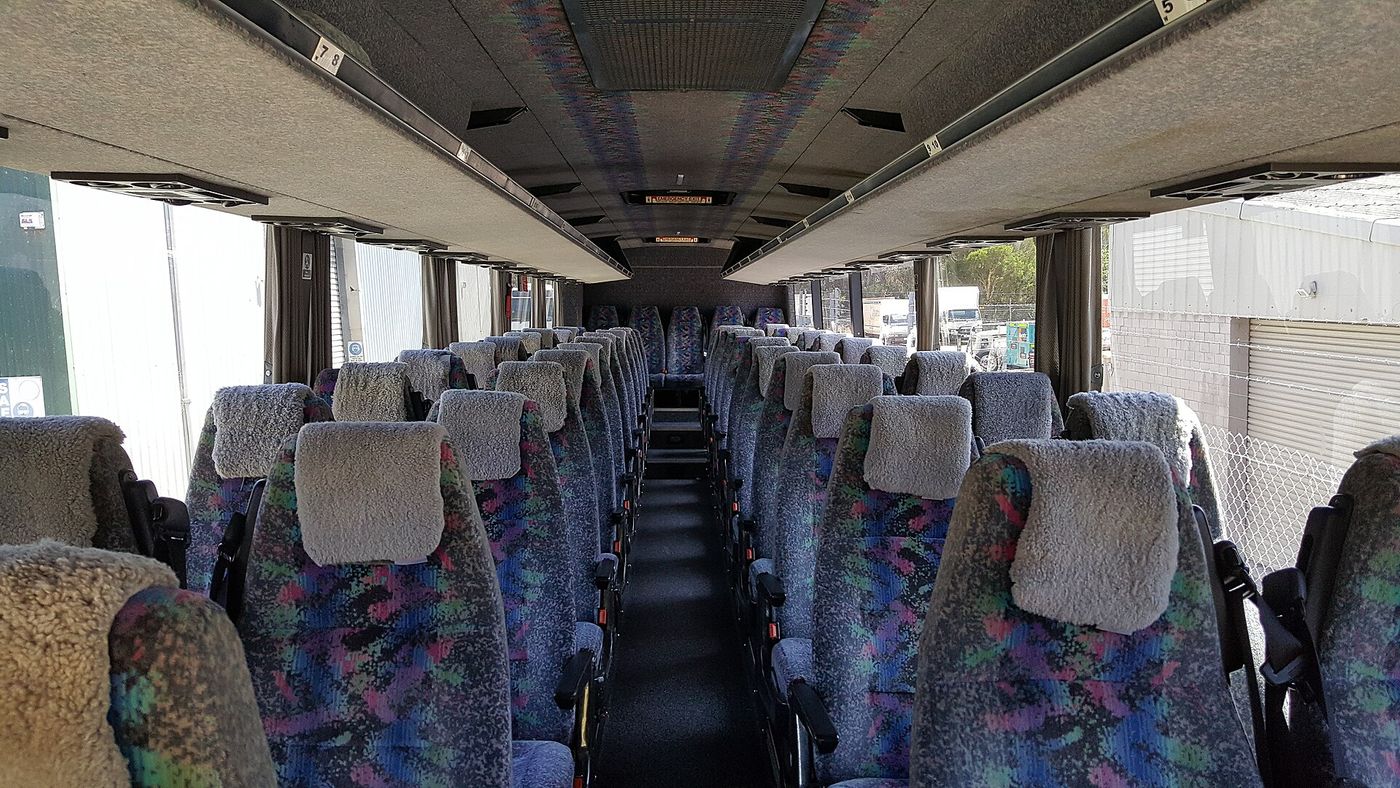
A bus has no single weight. What the laws and makers’ documents below give is the weight when fully laden. In the European Union, Annex I of Council Directive 96/53/EC allows a two-axle bus 19.5 tonnes in international traffic, a three-axle motor vehicle 25 or 26 tonnes and a three-axle articulated bus 28 tonnes. Makers’ documents for the 40 bus and coach ranges in the table below give gross weights from 5,000 kg (the Karsan e-JEST, a 5.8 m minibus) to 34,000 kg (the Otokar Kent XL, 21 m long on four axles); two-axle buses near 12 m are given 18,000 to 20,000 kg. Seat counts run from 9 fixed seats on the e-JEST to 83 in standard seating on the double-deck Setra S 531 DT and up to 91 in an interurban layout of the Neoplan Skyliner, and totals with standing passengers reach 169 on the BMC Procity 18 m and 220 on the Kent XL. US school bus makers publish ratings of up to 33,000 to 35,000 pounds for Type C and up to 36,200 to 37,600 pounds for Type D. None of these documents prints a figure for the empty bus.
Status as of 5 November 2026. Read on 4 and 5 November: Directive 96/53/EC in its consolidated text of 14 August 2019, the latest the EU Publications Office lists on 5 November, and UN Regulation No. 107 in the Official Journal text of 29 January 2026. School bus figures are those of the makers’ pages and sheets read on 28 October 2026. Figures for the 40 ranges are those of the model pages linked in the table, each of which cites the maker’s documents.
The EU weight limits
| Annex I point | Vehicle or rule | Limit | Addition for the technology |
|---|---|---|---|
| 2.3.1 | Two-axle bus | 19.5 tonnes | None after this figure; the point’s additions are worded on the 18 tonnes of other two-axle motor vehicles |
| 2.3.2 | Three-axle motor vehicle | 25 tonnes, or 26 tonnes where the driving axle has twin tyres and air suspension or equivalent, or where each driving axle has twin tyres and no axle exceeds 9.5 tonnes | Up to 1 tonne for alternative fuel, up to 2 tonnes for zero-emission technology |
| 2.4 | Three-axle articulated bus | 28 tonnes | Up to 1 tonne for alternative fuel, up to 2 tonnes for zero-emission technology |
| 3.4.2 | Driving axle of the vehicles in points 2.3 and 2.4 | 11.5 tonnes | – |
| 4.1 | Weight on the driving axle or axles, in international traffic | Not less than 25 % of the total laden weight | – |
Point 2.3.1 names buses and point 2.4 articulated buses; point 2.3.2 says “Three-axle motor vehicles” and does not except buses. The limits govern use, not construction. Article 2 defines the maximum authorised weight as “the maximum weight for use of a laden vehicle in international traffic”, and Article 1(2) says the Annex I weights are “valid as circulation standards and thus refer to loading conditions, not production standards”. For national passenger transport, Article 4(2)(b) lets a Member State authorise vehicles that do not conform to points 1.3, 2, 3, 4.1 and 4.3, among them the weights. The Directive does not apply to articulated buses with more than one articulated section (Article 1(3)).
Length, width, height and the history of the bus provisions are covered in bus and coach dimensions, the matching rows for goods vehicles in truck weights, GVW and GCW.
Weights and seats by range
| Range | Maximum laden weight | Seats | Total passengers, or seated + standing |
|---|---|---|---|
| BMC Procity | 10.7 m diesel and 12 m CNG 18,000 kg; 18 m diesel and CNG 28,000 kg; no weight row for the 12 m diesel | 10.7 m 23 or 25; 12 m 27; 18 m 39 | 10.7 m diesel 96 (23 + 73); 12 m diesel 27 + 76; 12 m CNG 97 (27 + 70); 18 m diesel 169 (39 + 130) |
| BMC Procity+ Electric | 12 m 20 t and 18 m 30 t, on the rows marked GVM only | 12 m 31; 18 m 43 | 12 m 31 + 31, or 31 + 60 at GVM 20 t; 18 m 43 + 63, or 43 + 92 at GVM 30 t |
| HABAŞ ComfortCity | Diesel 18,000 kg; ComfortCity-e and ComfortCity-H2 19,500 kg | 26 | Diesel and ComfortCity-e 106 (26 + 80); ComfortCity-H2 90 (26 + 64) |
| Irizar i6S | Two axles 18,000 to 19,000 kg; three axles 25,000 to 26,000 kg | 12 m: 55+1+1 to 45+1+1, by toilet and kitchen | Second-generation Hydrogen i6S Efficient: seating for 69 and up to 18 standing |
| Isuzu Citiport | Citiport 18 28,000 kg; 18 CNG 29,000 and 12 CNG 18,700 (no unit printed) | Citiport 18 40; 18 CNG 41; 12 CNG 26, 3 of them folding | 155 (40 + 115); 145 (41 + 104); 92 (26 + 66) |
| Isuzu Citivolt 12 | 19,500 kg | 34 | 34 + 48 (449 kWh); 34 + 66 (361 kWh); maximum 100 (361 kWh) |
| Isuzu Grand Toro | 11,480 kg | 37+1; 35+1+1 with a hostess seat; 33+1 | – |
| Iveco Crossway | Cursor 9 19,000 kg; Tector 7 18,000 kg; ELEC 19,500 kg; by country of registration | Line 47, 55, 61 (10.8, 12, 13 m); ELEC 57 at 12 m, at most 63 at 13 m | – |
| Iveco E-Way | 9.5 m 16,000 kg; 10.7 m 17,900 kg; 12 m 20,000 kg; 18 m 30,000 kg | 9.5 m 16; 10.7 m 17; 12 m 27 or 24; 18 m 35; each with a wheelchair space | – |
| Iveco Evadys | 19,000 kg | Up to 53 to 55 at 12 m and 59 to 63 at 13 m, by door layout | – |
| Iveco Urbanway | 12 m 20,000 kg; 18 m 30,000 kg; maximum by registration country | 12 m 20 to 31 (3 doors), 27 to 36 (2 doors); 18 m 29 to 46 (4 doors), 36 to 51 (3 doors) | – |
| Karsan e-ATA | e-ATA 10, 12 and LE 19,000 kg (19,500 kg optional); e-ATA 18 29,000 kg (28,000 kg optional) | Maximum: e-ATA 10 32; 12 40; LE 41; 18 52 | e-ATA 10 +/-79; 12 +/-89; LE up to 90; 18 +/-135 |
| Karsan e-ATA HYDROGEN | 19,000 kg (19,500 kg optional) | Maximum 40 | +/-90 |
| Karsan e-ATAK | 11,500 kg | 18, 21 or 23, by layout | Up to 52; 19 to 34 standing, by layout |
| Karsan e-JEST | 5,000 / 5,200 kg | 9 or 10 fixed, plus 2 foldable in some layouts | Up to 20 in Class A; 5 to 11 standing, by layout |
| MAN Lion’s City | – on the data sheets; a release of 13 May 2020 gives up to 30 tonnes for the 18 E of that time | At most 33 (10 E), 37 (12, 12 G), 44 (12 E, 12 E LE), 49 (18, 18 G), 53 (19, 19 G), 60 (18 E) | – on the data sheets; the same release gives up to 120 for the 18 E of that time |
| MAN Lion’s Coach | Base 19,700 kg; C, two axles, 20,600 kg; C, three axles, and L 25,530 kg; 14 E, three axles, 27,300 kg | At most: base 53; C, two axles, 59; C, three axles, 57; L 61 | – |
| MAN Lion’s Intercity | – | Up to 55 + 1 (R60), 59 + 1 (R61), 63 + 1 (R62) | – |
| Mercedes-Benz Citaro | Citaro and LE 19,500 kg; K 18,000 kg; G 28,000 kg | Citaro 1/31; K 1/25; G 42; LE 1/34 | eCitaro sheet: at most 84 (K), 88 (12 m), 146 (G) |
| Mercedes-Benz Conecto | Conecto 19,500 kg; G 28,000 kg | 26; G 40 | Up to 101; G up to 150 |
| Mercedes-Benz eIntouro | 19,500 kg | 51; M 59 | At most 55; M 63 |
| Mercedes-Benz Intouro | Intouro, K and M 19,500 kg; L, three axles, 24,750 kg | 55; K 47; M 63; L 71 | At most 92; K 79; M 103; L 117 |
| Mercedes-Benz Tourismo | Two axles 19,500 kg; three axles 24,750 kg | 1/51; M models 1/55; L 1/59 | 44 to 65 across the range |
| Mercedes-Benz Travego | – | 15 SHD 46+1+1; 16 SHD 2+1 41+1+1 | – |
| Neoplan Skyliner | – | Up to 83+1+1; up to 91 in the brochure’s interurban layout | Skyliner Express: up to 91 seats and 5 standing places |
| Neoplan Tourliner | – | Up to 53; C, two axles, 59; C, three axles, 57; L 63 | – |
| Otokar Kent | e-Kent 18,000 kg; articulated e-Kent 28,000 kg; Kent XL, four axles, 34,000 kg | Kent LF 26; e-Kent 27; Kent LF Körüklü 36; Kent XL 38 | 26 + 76; 27 + 36; 36 + 119; 38 + 182 |
| Otokar Sultan | – | Comfort 29+1; Mega 35+1+1; Giga 39+1+1 | – |
| Otokar Territo | – on the model documents; TERRITO school brochure 19,000 kg | e-TERRITO U: up to 57 seated (12 m), up to 63 seated (13 m) | Up to 49 (U 10), 57 (U 12), 63 (U 13) |
| Setra ComfortClass | S 511 HD, S 515 HD and S 516 HD/2 19,500 kg; S 516 HD, S 517 HD and S 519 HD 24,750 kg | S 511 HD 43; S 515 HD 51; S 516 HD/2 and S 516 HD 55; S 517 HD 59; S 519 HD 63 | At most 49; 55; 57 and 59; 61; 72 |
| Setra MultiClass 500 LE | S 510, S 515 and S 516 LE 19,500 kg; S 518 LE 24,750 kg | S 515 LE 51; S 516 LE up to 55 | At most: S 510 LE 99; S 515 LE 129; S 516 LE 135; S 518 LE 156 |
| Setra TopClass | S 515, S 516 and S 517 HDH 24,750 kg; S 531 DT 26,000 kg | 51; 55; 59; S 531 DT 83 | At most 53; 57; 63; S 531 DT 93 |
| Solaris Urbino 10,5 electric | 19,500 kg, up to 20,000 kg depending on country and tyres | 29, up to 33 in option | Up to 85 |
| Solaris Urbino 12 electric | 19,500 kg, up to 20,000 kg depending on country and tyres | 35, up to 41 in option | Up to 100 |
| Temsa Avenue Neo 9e | 15,700 kg | Class I 30; Class II 33, without wheelchair area | Up to 75 |
| Temsa LD SB Plus | 18,000 kg / 19,000 kg | 59 to 63, based on country regulations | – |
| Temsa Maraton | Maraton 12 18,000 kg; Maraton 13 19,000 kg, 18,000 kg on some Temsa pages | 53+1+1; 57+1+1 | “50/ 55”, “based on country regulations” |
| Temsa Prestij | – | 29+1; 25+1 and 27+1 optional | – |
| VDL Citea | LF-122, LE-122 and LE-135 19,500 kg; LE-149 25,250 kg; LF-181 30,000 kg | “at least 45 seated passengers” on each type | At most: LF-122 110; LE-122 105; LE-135 89; LE-149 138; LF-181 163 |
| Volvo 7900 Electric | 12.0 m 19,500 kg; 18.0 and 18.7 m 30,000 kg | – | 12.0 m 95; 18.0 m 150; 18.7 m 145 |
Two axles, near 12 metres. Gross figures run from 18,000 kg (the diesel HABAŞ ComfortCity, the BMC Procity 12 m CNG, the e-Kent, the Temsa Maraton 12) to 20,000 kg (the Iveco Urbanway and E-Way 12 m). The number in point 2.3.1, 19,500 kg, is printed for the Mercedes-Benz Citaro, Conecto, Intouro, eIntouro and Tourismo, the Setra S 515 HD and S 515 LE, the VDL Citea LF-122, the Solaris Urbino 12 electric, the Isuzu Citivolt 12 and the Volvo 7900 Electric 12.0 m. City buses of this length list 26 seats (Mercedes-Benz Conecto, Otokar Kent LF), 27 (BMC Procity), 1/31 (Citaro), 35 (Urbino 12 electric) or at most 37 (MAN Lion’s City 12), and totals of 100 (Urbino 12 electric), 101 (Conecto) or 110 (Citea LF-122). Coaches list 46+1+1 (Travego 15 SHD), 51 (Tourismo, S 515 HD), at most 53 (MAN Lion’s Coach, Neoplan Tourliner) and 53+1+1 (Maraton 12).
Three axles, one rigid body. The Mercedes-Benz Tourismo M/3 and L, the Intouro L, the Setra S 516 HD, S 517 HD, S 519 HD and S 518 LE and the three TopClass HDH models are given 24,750 kg, the three-axle diesel MAN Lion’s Coach 25,530 kg and the battery-electric Lion’s Coach 14 E 27,300 kg; Irizar gives its three-axle i6S a band of 25,000 to 26,000 kg. VDL gives its 14.9 m Citea LE-149 25,250 kg and no axle count. Standard seating on these bodies reaches 59 (Tourismo L, S 517 HD and S 517 HDH), 63 (S 519 HD) and 71 (Intouro L), and maximum capacity 117 (Intouro L) and 156 (S 518 LE).
Articulated. The number in point 2.4, 28,000 kg, is printed for the Mercedes-Benz Citaro G and Conecto G, the Isuzu Citiport 18, the BMC Procity 18 m and the articulated e-Kent. The Citiport 18 CNG sheet prints 29,000 with no unit, Karsan gives the e-ATA 18 29,000 kg with 28,000 kg optional, and the Iveco Urbanway and E-Way 18 m, the VDL Citea LF-181 and the articulated Volvo 7900 Electric are given 30,000 kg. Listed seats include 35 (E-Way 18 m, with a wheelchair space), 39 (Procity), 40 (Conecto G, Citiport 18) and 42 (Citaro G), and at most 60 on the MAN Lion’s City 18 E; totals include 150 (Conecto G, Volvo 18.0 m), 155 (Citiport 18), 163 (Citea LF-181) and 169 (Procity diesel).
Four axles, 21 metres. The Otokar Kent XL is given 34,000 kg with 38 seated and 182 standing. Article 1(3) of the Directive excludes articulated buses with more than one articulated section, and the Otokar documents behind its model page do not say how many articulated sections it has.
Double-deck. The Setra S 531 DT is given 26,000 kg, 83 seats in standard seating and a passenger capacity of 54 to 93. The Neoplan Skyliner brochure gives up to 83+1+1 seats, with up to 91 in an interurban layout, and no weight.
Under 11 metres. The Karsan e-JEST is given 5,000 / 5,200 kg, the 8.5 m Isuzu Grand Toro 11,480 kg, the 8.3 m Karsan e-ATAK 11,500 kg, the 9.5 m Temsa Avenue Neo 9e 15,700 kg and Iveco’s E-Way 16,000 kg at 9.5 m and 17,900 kg at 10.7 m. The Citaro K and the BMC Procity 10.7 m are both given 18,000 kg.
No gross weight. The documents for the MAN Lion’s Intercity, the Mercedes-Benz Travego, the Neoplan Skyliner and Tourliner, the Otokar Sultan and the Temsa Prestij give none. The Travego sheet gives axle capacities instead.
Gross weight and empty weight
Data sheets print the gross figure under many labels: “Gross vehicle weight” (Mercedes-Benz, Setra), “G.V.W. max permitted weight” (Iveco E-Way), “GVWR” (Temsa). UN Regulation No. 107 calls it the technically permissible maximum laden mass, M: “the maximum mass of the vehicle based on its construction and performance, stated by the manufacturer” (paragraph 2.19). That is a different kind of number from the Annex I limit: MAN states the two-axle Lion’s Coach C at 20,600 kg, above the 19.5 tonnes of point 2.3.1, and Iveco’s Urbanway sheets carry the footnote “Max depending on registration country”. How the two sets of figures are read side by side on a data sheet is set out in how a coach specification sheet is read.
For the unladen bus, the Regulation’s term is the mass of the vehicle in running order: “the mass of the unladen vehicle with bodywork”, counted with “coolant, oils, 90 per cent fuel, 100 per cent other liquids except used waters, tools, spare wheel and driver (75 kg)” and, for buses and coaches, a crew member of 75 kg if there is a crew seat (paragraph 2.18). So the Regulation’s unladen figure already includes a driver. Annex 11, paragraph 3.1 has that mass measured on the vehicles submitted for approval; where the result is within 3 per cent of what the manufacturer states for that technical configuration (5 per cent for an M2 vehicle of up to 3,500 kg), the stated mass is used.
No figure for it appears in the makers’ documents behind the table. On Iveco’s 12 m and 18 m E-Way sheets the “Gross kerb weight” row reads “according to equipment”, the “Dimensions & Weights” block of Temsa’s Prestij page has no weight row, and the Travego sheet prints no unladen weight.
How passengers count towards the weight
Annex 11, paragraph 3.2.3.1 of UN Regulation No. 107 sets the sum: the mass in running order, plus the mass of one passenger (Q) multiplied by the seated and standing passengers, plus the wheelchair and baggage masses and any coupling-point mass, “shall not exceed the mass M”. Paragraph 3.2.3.2 then tests the same load axle by axle. The Regulation does not apply to vehicles specially designed for the carriage of school children (paragraph 1.2.4); see school transport vehicles.
| Item | Classes I and A | Class II | Classes III and B |
|---|---|---|---|
| Mass of one passenger, Q | 68 kg | 71 kg, including 3 kg for hand baggage | 71 kg, including 3 kg for hand baggage |
| Conventional space for one standing passenger | 0.125 m² | 0.15 m² | None; the standing area is zero |
| Each wheelchair space | 250 kg, “representing the mass of a wheelchair and user” | ||
| Baggage compartments, B | Declared by the manufacturer, not less than 100 × the volume in m³ | ||
| Roof baggage, BX | Declared by the manufacturer, not less than 75 kg/m²; zero on double-deck vehicles | ||
At those values 100 passengers count as 6,800 kg in Class I or A (100 × 68 kg). With M at 19,500 kg, that leaves 12,700 kg for the mass in running order and the wheelchair, baggage and coupling-point masses. In Class III, 51 passengers count as 3,621 kg (51 × 71 kg). The class definitions are in bus classes under UN R107, and the baggage floor is worked through in how a coach specification sheet is read.
What sets the number of seats
UN Regulation No. 107 starts from the floor. For Classes I, II and A, Annex 3, paragraph 7.2.2.3 says the seating places on each deck “shall be at least equal to the number of square metres of floor on that deck available for passengers and crew (if any) rounded down to the nearest whole number”. In Class I, excluding the upper deck, that number may be reduced by 10 per cent. A deck with 30 m² of such floor therefore has at least 30 seats, or 27 in Class I.
Standing passengers follow from what is left. Their number “shall not exceed” the standing area divided by the conventional space (Annex 11, paragraph 3.2.3.2.1), which at the values above is 8 people per square metre in Classes I and A and about 6.7 in Class II. The standing area deducts, among other items, the 300 mm in front of seats other than folding seats (225 mm may apply at a sideways-facing seat), any part of the floor not accessible when the seats are occupied, the area where Class II does not allow standing and the whole upper deck of a double-deck vehicle (Annex 3, paragraph 7.2.2.2). Where seating is variable, the requirements apply to each condition in turn: all seats occupied first, all standing areas first, and all wheelchair spaces first (Annex 11, paragraph 3.2.3.2.2).
Annex 3, paragraph 7.7.8.4.1 sets a minimum spacing between seats facing the same way of 650 mm in Classes I, A and B and 680 mm in Classes II and III. Makers’ documents tie the count to the layout:
- Pitch and fittings. Irizar’s 12 m i6S table lists, among other layouts, 55+1+1, 53+1+1 and 51+1+1 with a low toilet or none at 710 to 750 mm minimum pitch, and 51+1+1, 49+1+1 or 45+1+1 with a high toilet and a kitchen at 710 to 800 mm.
- Seats per row. The Mercedes-Benz Travego 15 SHD has 46+1+1 in 2+2 seating; the longer 16 SHD 2+1 has 41+1+1.
- Doors. Iveco’s 12 m Urbanway takes 20 to 31 seats with 3 doors and 27 to 36 with 2 doors. In Classes I, A and II the minimum number of service doors in UN Regulation No. 107 itself depends on the passenger count (Annex 3, paragraph 7.6.1.1), as set out in bus doors and emergency exits.
Each vehicle carries its own figures. Annex 11, paragraph 3.3.1 requires it to be clearly marked inside, in a position visible to the driver, with the maximum seating places and, if any, standing places and wheelchairs, and with the baggage mass.
How makers write seat counts
The notation is not uniform. Anadolu Isuzu spells it out for the Grand Toro as 37 passengers plus 1 driver, or 35 passengers plus 1 hostess plus 1 driver. Temsa, Otokar, Irizar and Neoplan write forms such as 53+1+1 and 39+1+1, Mercedes-Benz writes 1/51 on the Tourismo and 46+1+1 on the Travego, and MAN writes “Up to 55 + 1” on the Lion’s Intercity, whose documents do not say what the “+ 1” seat is.
Standard seating and capacity are different rows. Setra’s S 515 HD has 51 seats in standard seating and a passenger capacity of 40 to 55; its S 515 LE has a passenger capacity of 22 to 129. On buses with standing room, a maximum may combine seated and standing passengers, as on the Isuzu Citiport 18: 155 is 40 seated and 115 standing, and with 2 wheelchairs it becomes 40 seats and 107 standing.
Documents from one maker can also differ. For the Isuzu Citivolt 12 the catalogue gives a maximum of 100 passengers, the Turkish model page up to 98 and the English model page up to 115. For the Volvo 7900 Electric 12.0 m the specifications page gives 95 and the product page 98. For a 12 m Otokar Kent, the Turkish sheets give 26 + 76 and Otokar Europe’s KENT C 12 page 108.
Where weight and passenger numbers move together
Some makers’ documents tie the passenger number directly to the gross weight, the battery or the country of registration.
- Solaris. A footnote to its press release of 5 March 2024 gives, for the Urbino 12 electric with 300 kWh batteries, 100 people as the maximum in Italy, France and Spain at a gross vehicle weight of 20 tonnes, and 94 people at 19.5 tonnes “pursuant to European provisions”.
- BMC. The technical specifications for the Procity+ Electric 12 m list 31 seated and 31 standing, and in a row marked GVM 20 t 31 seated and 60 standing; at 18 m, 43 and 63, and 43 and 92 at GVM 30 t.
- Anadolu Isuzu. The Citivolt 12 catalogue keeps 34 seats and gives 48 standing places with the 449 kWh battery and 66 with the 361 kWh battery.
- Otokar. Its 2024 Turkish range brochure gives the e-Kent a maximum of 74 passengers at a maximum laden weight of 18,000 kg; Otokar Europe’s e-KENT C 12 page gives up to 122.
- Karsan. A footnote to the e-ATA figures says passenger capacity may change with battery capacity, seat layout, door arrangement, GVW and technical gross axle value depending on the country of registration.
- Temsa. The LD SB Plus brochure gives “59/ 63” passengers with the note “based on country regulations”.
US school buses
US federal rules define the gross vehicle weight rating as “the value specified by the manufacturer as the loaded weight of a single vehicle” (49 CFR 571.3). The rating is explained in GVWR, GCWR and GAWR. School bus makers publish it, and no curb weight appears in the documents below.
| Model | Type as the maker states it | GVWR | Passengers |
|---|---|---|---|
| Collins Type A, SH / TH / DH / DE Series | Type A | 9,900–10,100 / 9,070–11,000 / 11,500–14,500 / 11,500–14,500 (no unit given) | Maximum seated capacity 20 / 21 / 35 / 32 |
| Thomas Built Saf-T-Liner C2 | Type C | Up to 33,000 lbs (14,969 kg) | Up to 81 |
| IC Bus CE Series, diesel or gasoline | Type C | Up to 33,000 lbs (14,969 kg) | Up to 83 |
| IC Bus CE Series, electric | Type C | Up to 35,000 lbs (15,876 kg) | Up to 78 |
| Thomas Built Saf-T-Liner EFX2 and HDX2 | Type D | Up to 36,200 lbs (16,420 kg) | Up to 90 |
| Thomas Built Saf-T-Liner HDX2 Wattson | Type D | Up to 37,600 lbs (17,055 kg) | Up to 90 |
Trans Tech’s Type A school bus (up to 35 passengers), IC Bus’s RE Series (up to 90) and GreenPower’s BEAST (up to 90 passengers and driver) have no GVWR in the page text read. Collins adds that “All passenger capacities are references and subject to final weight analysis”. The type definitions, the GVWR subclasses in State law and the 4,536 kg line in Federal Motor Vehicle Safety Standard No. 222 are in school bus types and dimensions; the federal limits for a loaded truck are in how much a semi-truck weighs.
Rules by country
| Country | Maximum weight | Seats and passenger mass | Source |
|---|---|---|---|
| EU Member States | 19.5 tonnes with two axles, 25 or 26 tonnes for a three-axle motor vehicle, 28 tonnes three-axle articulated, in international traffic; a Member State may authorise vehicles for national passenger transport that do not conform (Article 4(2)(b)); national rules not verified | UN Regulation No. 107: seats per m² of floor in Classes I, II and A, 68 or 71 kg per passenger | Directive 96/53/EC, consolidated text of 14 August 2019; UN Regulation No. 107, OJ L, 29.1.2026 |
| United States | Federal limit for buses not verified; GVWR is the manufacturer’s value | Not verified | 49 CFR 571.3, edition revised as of October 1, 2025 |
| United Kingdom | Not verified | None read | |
| Switzerland | Not verified | None read | |
| Türkiye | Not verified | None read | |
| Russia | Not verified | None read | |
Countries without a row are not covered.
Quick answers
- How much does a bus weigh?
- The laws and makers' documents on this page give the laden figure, not the empty one. In the EU, Directive 96/53/EC allows 19.5 tonnes for a two-axle bus in international traffic, 25 or 26 tonnes for a three-axle motor vehicle and 28 tonnes for a three-axle articulated bus. Makers' documents give 18,000 to 20,000 kg for two-axle buses near 12 m, 24,750 to 27,300 kg for three-axle coaches, 28,000 to 30,000 kg for articulated buses of about 18 m, 34,000 kg for the 21 m Otokar Kent XL and 5,000 / 5,200 kg for the Karsan e-JEST minibus. None of the documents behind the table on this page prints a figure for the empty bus; on Iveco's E-Way 12 m and 18 m sheets the kerb weight row reads 'according to equipment'.
- How many seats does a bus or coach have?
- It depends on the body and the layout. Makers list 26 seats on the Mercedes-Benz Conecto, 1/31 on the 12 m Citaro and at most 37 on the MAN Lion's City 12 among 12 m city buses; 46+1+1 on the Mercedes-Benz Travego 15 SHD, 51 on the Mercedes-Benz Tourismo and the Setra S 515 HD and at most 53 on the MAN Lion's Coach and the Neoplan Tourliner among coaches of about 12 m; 71 on the three-axle Mercedes-Benz Intouro L; 83 in standard seating on the double-deck Setra S 531 DT; and 29+1 on the Otokar Sultan Comfort and the Temsa Prestij among midibuses.
- How many passengers can a bus carry, including standing?
- Makers give up to 100 on the Solaris Urbino 12 electric, 101 on the Mercedes-Benz Conecto and 110 on the VDL Citea LF-122 at about 12 m; 150 on the Conecto G, 155 on the Isuzu Citiport 18 and 169 on the BMC Procity 18 m diesel among articulated buses; and 38 seated plus 182 standing on the 21 m Otokar Kent XL. UN Regulation No. 107 limits standing passengers to the standing area divided by 0.125 m² each in Classes I and A and 0.15 m² each in Class II; Classes III and B carry none. The total can change with the gross weight: Solaris gives 100 people at 20 tonnes and 94 at 19.5 tonnes.
- How much does a school bus weigh?
- US makers publish the gross vehicle weight rating, which 49 CFR 571.3 defines as the value specified by the manufacturer as the loaded weight of a single vehicle; the makers' documents behind the table on this page give no empty weight. Thomas Built and IC Bus give up to 33,000 lbs (14,969 kg) for the Saf-T-Liner C2 and the diesel or gasoline CE Series, IC Bus up to 35,000 lbs (15,876 kg) for the electric CE Series, and Thomas Built up to 36,200 lbs (16,420 kg) for its Type D EFX2 and HDX2 and up to 37,600 lbs (17,055 kg) for the HDX2 Wattson. Collins lists 9,070 to 14,500 for its Type A series with no unit given.
- How much does one passenger count for in a bus's weight?
- UN Regulation No. 107 counts 68 kg per passenger in Classes I and A and 71 kg, including 3 kg of hand baggage, in Classes II, III and B. A wheelchair space counts 250 kg, baggage not less than 100 kg per cubic metre of compartment volume and roof baggage not less than 75 kg/m². The driver at 75 kg, and a crew member at 75 kg where the vehicle has a crew seat, are already inside the mass in running order. The whole sum must not exceed the maximum laden mass the manufacturer states.
Models in this article
- Karsan e-JEST
- Otokar Kent
- Neoplan Skyliner
- BMC Procity
- BMC Procity+ Electric
- HABAŞ ComfortCity
- Irizar i6S
- Isuzu Citiport
- Isuzu Citivolt 12
- Isuzu Grand Toro
- Iveco Crossway
- Iveco E-Way
- Iveco Evadys
- Iveco Urbanway
- Karsan e-ATA
- Karsan e-ATA HYDROGEN
- Karsan e-ATAK
- MAN Lion's City
- MAN Lion's Coach
- MAN Lion's Intercity
- Mercedes-Benz Citaro
- Mercedes-Benz Conecto
- Mercedes-Benz eIntouro
- Mercedes-Benz Intouro
- Mercedes-Benz Tourismo
- Mercedes-Benz Travego
- Neoplan Tourliner
- Otokar Sultan
- Otokar Territo
- Setra ComfortClass
- Setra MultiClass 500 LE
- Setra TopClass
- Solaris Urbino 10,5 electric
- Solaris Urbino 12 electric
- Temsa Avenue Neo 9e
- Temsa LD SB Plus
- Temsa Maraton
- Temsa Prestij
- VDL Citea
- Volvo 7900 Electric
Sources
- Council Directive 96/53/EC on the maximum authorised dimensions and weights of certain road vehicles — consolidated text of 14 August 2019: Articles 1 to 4, Annex I points 2.3.1, 2.3.2, 2.4, 3.4.2 and 4.1 — EUR-Lex, European Union
- UN Regulation No. 107 — approval of category M2 or M3 vehicles with regard to their general construction [2026/139] (OJ L, 29.1.2026), incorporating all valid text up to the 10 and 11 series of amendments: paragraphs 1.2.4, 2.18 and 2.19; Annex 3 paragraphs 7.2.2, 7.6.1.1 and 7.7.8; Annex 11 paragraphs 3.1, 3.2.3 and 3.3.1 — Official Journal of the European Union / UNECE
- 49 CFR 571.3 — Definitions (Code of Federal Regulations, annual edition revised as of October 1, 2025) — National Highway Traffic Safety Administration (govinfo, U.S. Government Publishing Office)
- Mobility Move 2024: new version of the Solaris Urbino 12 electric bus debuts (press release, 5 March 2024), footnote 1 — Solaris Bus & Coach, 5 Mar 2024
- Solaris Urbino 12 electric with modular drive — technical data (Busworld 2025 press assets) — Solaris Bus & Coach
- Citivolt 12 — catalogue (PDF, Türkiye, created 20 July 2026): passenger capacity rows — Anadolu Isuzu Otomotiv Sanayi ve Ticaret A.Ş.
- Grand Toro — technical specifications and equipment (catalogue, Türkiye; PDF created 15 October 2026) — Anadolu Isuzu Otomotiv Sanayi ve Ticaret A.Ş.
- Citiport 18 — technical specifications and equipment (data sheet, Türkiye; PDF created 20 July 2026) — Anadolu Isuzu Otomotiv Sanayi ve Ticaret A.Ş.
- Procity — Technical Specifications, tabs for the diesel, CNG and +12 and +18 meter electric buses (web page, undated) — BMC Otomotiv Sanayi ve Ticaret A.Ş.
- e-ATA 12 — specs, with the footnotes to seat and passenger capacity — Karsan Otomotiv Sanayi ve Ticaret A.Ş.
- E-WAY FULL ELECTRIC 12m — international data sheet (EN-Eway-12m-01_2025, PDF created 16 October 2024), weights rows — Iveco Bus
- URBANWAY — Low Floor Cursor 9 Diesel Euro VI/E GSR B, 12 m (international technical sheet, code DTHQBCL2021) — Iveco Bus
- Irizar i6S — Technical specifications (technical catalogue, 11 pages): 12 m seat table — Irizar
- Prestij — product page (international site, English) — TEMSA
- TEMSA LD SB PLUS brochure (English, information as of 10/2025) — Temsa Skoda Sabancı Ulaşım Araçları A.Ş.
- TERRITO school — Technical specifications Europe (brochure, footer code OEU - EN - TERRITO School - 09/2025), weight rows — Otokar Europe SAS
- ComfortClass 500 HD models — technical data and equipment (data sheet, footer 03/2026) — Setra / Daimler Buses
- TRAVEGO technical and equipment sheet (January 2026) — Mercedes-Benz Türk A.Ş.
- Collins Type A School Bus brochure (03/26) — Collins, a division of Forest River, Inc.
- Trans Tech buses: Type A School Bus — Trans Tech Bus
- Evolved Saf-T-Liner C2: product page — Thomas Built Buses
- Saf-T-Liner EFX2: product page — Thomas Built Buses
- Saf-T-Liner HDX2: product page — Thomas Built Buses
- Saf-T-Liner HDX2 Wattson: product page — Thomas Built Buses
- IC Bus CE Series school bus specification sheet, diesel and gasoline (06/2025) — IC Bus
- IC Bus CE Series electric school bus specification sheet (01/2024) — IC Bus
- RE Series Type D School Bus: product page — IC Bus
- BEAST school bus: product page — GreenPower Motor Company
- Kent LF — teknik özellikler (technical data sheet, document code KS70TP-26) — Otokar Otomotiv ve Savunma Sanayi A.Ş.
- Kent XL — teknik özellikler (technical data sheet, document code KS90TA-21) — Otokar Otomotiv ve Savunma Sanayi A.Ş.
- Şehir içi otobüsler — city bus range brochure (document code KS87TE-24) — Otokar Otomotiv ve Savunma Sanayi A.Ş.
- KENT C 12 — model page giving a maximum capacity of 108 — Otokar Europe SAS
- e-KENT C 12 — model page — Otokar Europe SAS
- Specifications for Volvo 7900 Electric — Volvo Buses
- Volvo 7900 Electric bus (product page) — Volvo Buses
- Isuzu Citivolt 12 — model page (Türkiye) — Anadolu Isuzu Otomotiv Sanayi ve Ticaret A.Ş.
- Isuzu Citivolt 12 — model page (English version) — Anadolu Isuzu Otomotiv Sanayi ve Ticaret A.Ş.
- MAN Lion's Coach C (two axles) — data sheet (man-bus-datenblatt-lions-coach-c2-en.pdf) — MAN Truck & Bus
- Bigger, more powerful and more efficient: MAN Lion's City 18 E celebrates sales launch and première (13 May 2020) — MAN Truck & Bus Press
- MAN Lion's Intercity — brochure (footer D112.596 · 09/2025), technical data page 11 — MAN Truck & Bus
- NEOPLAN Skyliner brochure, English (edition Sky_0923_en), technical data pages 22-23 — NEOPLAN / MAN Truck & Bus SE
- MultiClass 500 — technical data and equipment (data sheet, footer 02/2026) — Setra / Daimler Buses
- TopClass S 531 DT — technical data and equipment (data sheet, footer 09/2026) — Setra / Daimler Buses
- E-WAY FULL ELECTRIC 18m — international data sheet (EN-Eway-18m-01-2025, PDF created 16 January 2025) — Iveco Bus