Mercedes-Benz OM 936 engine: displacement, ratings and generations
The Mercedes-Benz OM 936 is a 7.7-litre in-line six-cylinder Euro VI diesel from Daimler Truck, presented in 2012: its ratings, its bus versions and the vehicles that use it.
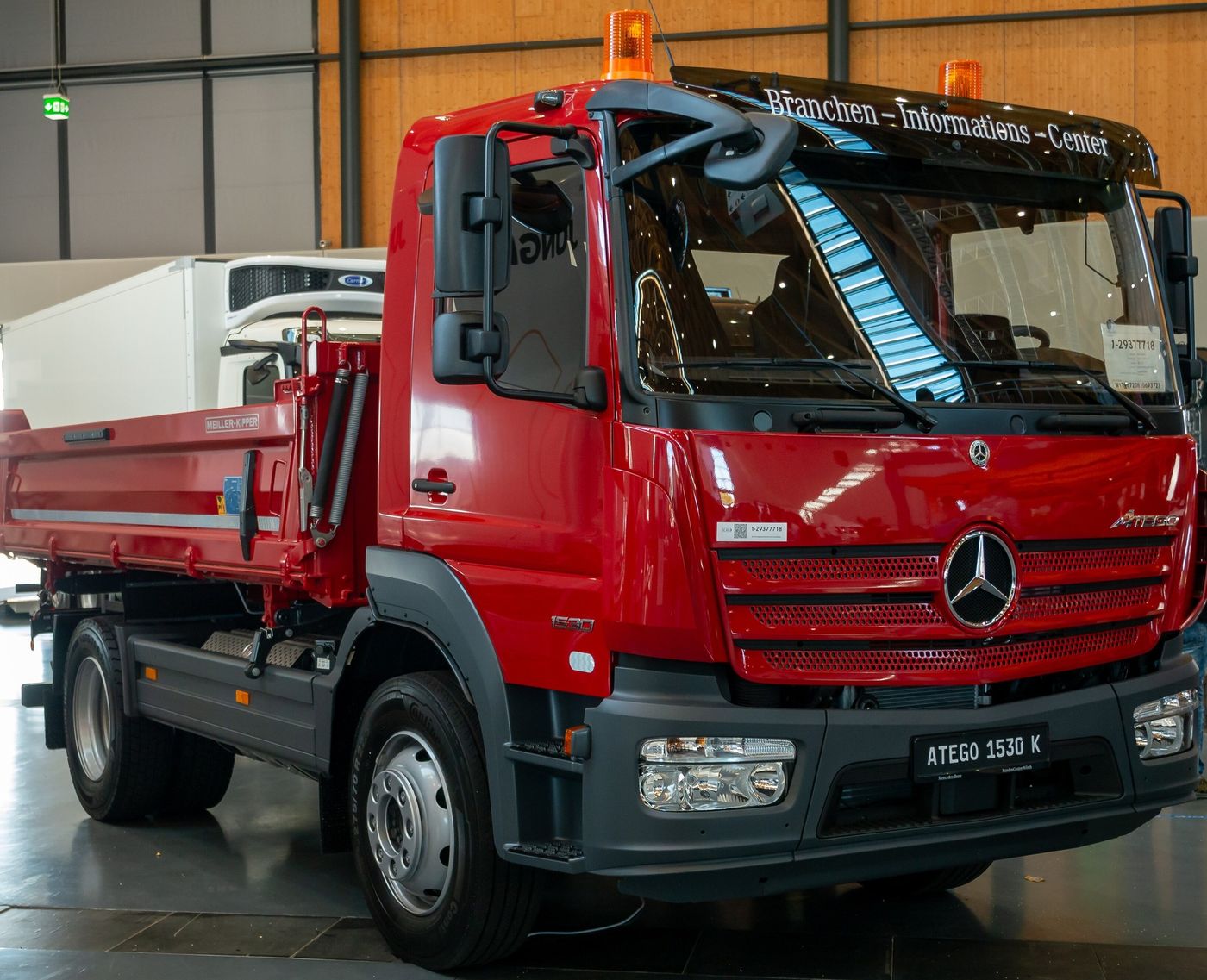
The Mercedes-Benz OM 936 is a 7.7-litre in-line six-cylinder diesel engine from Daimler Truck. It is the six-cylinder member of the medium-duty OM 93x series, beside the four-cylinder OM 934. Daimler presented it in March 2012 as a Euro VI engine for light and medium trucks and for buses, built at its Mannheim engine plant, and Mercedes-Benz Powertrain lists it today with five ratings from 175 kW to 260 kW for trucks and buses. On this site it is one of the engines of the Mercedes-Benz Actros, Arocs and Atego trucks and of the Mercedes-Benz Citaro, Conecto and Intouro and the Setra MultiClass 500 LE buses.
Status as of 26 October 2026. Read that day: Mercedes-Benz Powertrain’s Portfolio Truck EURO VI brochure (dated 09/2025) and its Bus Euro VI engine page, Daimler’s press release on the OM 93x series dated Stuttgart, 13 March 2012 (the Italian version on the Mercedes-Benz Italia press site), and the Mercedes-Benz Buses page on the OC 500 LE chassis. All four are the maker’s own documents.
Maker, name and layout
Mercedes-Benz Powertrain, whose brochure is published by Daimler Truck AG, lists the OM 936 among its medium-duty engine systems for trucks and buses. The name follows the scheme the truck brochure sets out: OM marks an oil (diesel) engine, then “93 = 93X model series (MD)” and “6 = L6 cylinder engine (7.7 l)”. The engine page in the brochure gives “Arrangement: In-line 6” and “Displacement: 7.7 l”. Daimler’s 2012 release gives a bore of 110 mm and a stroke of 135 mm, with a cylinder spacing of 128 mm.
For the medium-duty series as a whole, Mercedes-Benz Powertrain lists in-line diesel engines with cooled exhaust gas recirculation, a common rail injection system of up to 2,400 bar with multiple injection, two overhead camshafts with 4-valve technology, 1- and 2-stage turbochargers and a “One box” exhaust after-treatment “with SCR and DPF”. The 2012 release adds that the injection strategy allows up to five individual injections per cycle, that the two overhead camshafts work four parallel valves per cylinder, and that a variable camshaft phaser (VCP) on the exhaust camshaft can advance its timing by up to 65 degrees, which the release ties to regenerating the particulate filter.
On turbocharging, the 2012 release says the OM 936 up to 220 kW (299 hp) uses an asymmetric turbocharger (“turbocompressore asimmetrico a doppia turbina”), and the two higher ratings use two-stage charging with two turbochargers. The brochure gives two weights by charger type: 652 kg with a “single stage charger” and 666 kg with a “dual stage charger” (DIN 70020 - GZ), both “depending on equipment installed”. The 2012 release gave a dry weight of 650 kg (DIN 70020-A).
The engine brake is a double-cycle decompression brake, in the words of the 2012 release. It gave the six-cylinder 235 kW of braking power in its standard version and 300 kW in its Premium version, reached at 2,700 to 3,000 rpm, and operated in three stages from the steering-column lever on the OM 936. Mercedes-Benz Powertrain’s current documents give the medium-duty series engine brakes “with up to 300 kW brake power”. What an engine brake is, and how the law groups it, is set out in retarders and engine braking. The brochure also lists multiple power take-off options; the 2012 release describes a rear power take-off on the gear drive, available on request, with a maximum usable torque of 600 Nm.
Ratings
Mercedes-Benz Powertrain’s truck brochure of 09/2025 and its bus engine page list the same five ratings for the OM 936, each with rated power at 1,800 rpm and maximum torque at 1,200–1,600 rpm.
| Rated power (kW/hp) | Maximum torque (Nm) | Truck brochure (09/2025) | Bus engine page | Bus versions in the 2012 release |
|---|---|---|---|---|
| 175/238 | 1,000 | Listed | Listed | — |
| 200/272 | 1,100 | Listed | Listed | — |
| 220/299 | 1,200 | Listed | Listed | OM 936 and OM 936 h |
| 235/320 | 1,300 | Listed | Listed | — |
| 260/354 | 1,400 | Listed | Listed | OM 936 and OM 936 h |
Daimler’s 2012 launch release lists the same five pairs of power and torque, with maximum torque at 1,200–1,600 rpm, but gives rated power at 2,200 rpm where the current brochure and bus page give 1,800 rpm. None of the documents explains the difference. How kW and hp relate, and what the engine speed beside each figure means, is explained in reading truck power figures.
Generations
None of the documents read for this page divides the OM 936 into generations or dates a change to it. The 2012 release presents the engine; the 09/2025 brochure lists the same five pairs of power and torque, with rated power at 1,800 rpm where the release gave 2,200 rpm.
| Date | What the documents say |
|---|---|
| 1996 | The 900 series is presented; the 2012 release says the OM 93x engines replace it and names the OM 926 LA as the predecessor of the OM 936 |
| 2005 | Development for series production of the OM 93x series begins |
| 13 March 2012 | Daimler presents the OM 934, OM 936 and the horizontal OM 936 h, all ratings to Euro VI |
| 2012 | Series production at Daimler’s Mannheim engine plant to begin in the same year, according to the release |
| 1 January 2014 | Euro VI comes into force in the EU, the date the 2012 release gives |
| 09/2025 | Mercedes-Benz Powertrain’s truck brochure lists five ratings from 175 kW to 260 kW |
Launch in 2012
Daimler’s release of 13 March 2012 presents the OM 93x engines as a completely new series for light and medium trucks and for buses, and says every version already met the Euro VI emission standard, which would come into force in the EU on 1 January 2014. The engines were built at the Daimler Trucks engine plant in Mannheim, where the release puts the start of series production in 2012, and Daimler Trucks invested approximately 500 million euros in developing the series and in its production facilities. The release names light, medium and heavy distribution vehicles, light and medium vehicles in construction and in line haul (“trasporto di linea”), and city and intercity buses as the intended uses; later stages were to bring the engines to other markets and other Daimler Trucks models and into use as an industrial engine.
The horizontal OM 936 h for buses
For city buses, the 2012 release describes a horizontal version of the six-cylinder in two ratings, 220 kW (299 hp) and 260 kW (354 hp), designed for the very limited engine space at the rear of a city bus. The base engine was not changed for it, because the horizontal version had been planned from the start; the ancillary units were developed specifically for this installation. For city and intercity buses the release lists the OM 936 and the OM 936 h in these two ratings and says the power output and torque are the same as those of the truck engines. Mercedes-Benz Powertrain’s current bus engine page lists all five ratings under its medium-duty engines and does not mention a horizontal version.
Fuels and emission class
Mercedes-Benz Powertrain describes the series as “4- and 6-cylinder diesel engines in an in-line arrangement with cooled exhaust gas recirculation”. None of the documents read for this page lists a gas-fuelled version of the OM 936, and none mentions HVO or another renewable diesel; what HVO is, and which standard covers it, is set out in what is HVO fuel. Mercedes-Benz Buses says its OC 500 LE chassis, which it equips with the OM 936 at 220 kW or 299 hp, can be equipped with a 48-volt hybrid system whose module’s 14 kW electric motor generates energy when coasting and braking and supports the diesel engine when moving off and idling.
Mercedes-Benz Powertrain lists the OM 936 among its Euro VI engine systems. Its exhaust after-treatment is the “One box” system with SCR and DPF; the 2012 release lists its parts in the direction of exhaust flow as an oxidation catalyst (DOC), a diesel particulate filter with a precious-metal coating (DPF) and an SCR catalyst for reducing nitrogen oxides, followed by an anti-slip catalyst. How SCR and AdBlue work is covered in SCR and AdBlue explained, and the steps of Euro VI and what Euro 7 adds in Euro VI and Euro 7.
Trucks and buses on this site with the Mercedes-Benz OM 936
Seven model pages on this site list the OM 936 among their engines. The figures below are those recorded on each model’s own page and taken from that page’s source; they are not the engine-level table above.
| Model | Engine as recorded | Power (kW) | Torque (Nm) |
|---|---|---|---|
| Mercedes-Benz Actros | OM 936 | 175–260 | 1,000–1,400 |
| Mercedes-Benz Arocs | OM 936 | 175–260 | 1,000–1,400 |
| Mercedes-Benz Atego | Mercedes-Benz OM 936 | 175–220 | 1,000–1,200 |
| Mercedes-Benz Citaro | Mercedes-Benz OM 936 / OM 936 h | 220–260 | 1,200–1,400 |
| Mercedes-Benz Conecto | Mercedes-Benz OM 936 (Conecto) | 220 | 1,200 |
| Mercedes-Benz Intouro | Mercedes-Benz OM 936 | 220–260 | — |
| Setra MultiClass 500 LE | Mercedes-Benz OM 936 | 220–260 | 1,200–1,400 |
Mercedes-Benz Buses also lists the OM 936 on its OC 500 LE bus chassis, which has no model page on this site.
Quick answers
- What is the displacement of the Mercedes-Benz OM 936?
- 7.7 litres. Mercedes-Benz Powertrain lists the OM 936 as an in-line six-cylinder diesel engine with a displacement of 7.7 l. In its naming scheme OM stands for an oil (diesel) engine, 93 for the medium-duty 93X model series and the final 6 for the 7.7-litre six-cylinder. Daimler's launch release of March 2012 gives a bore of 110 mm and a stroke of 135 mm.
- How much power and torque does the OM 936 have?
- Mercedes-Benz Powertrain's Euro VI truck brochure (09/2025) and its bus engine page list five ratings: 175 kW (238 hp), 200 kW (272 hp), 220 kW (299 hp), 235 kW (320 hp) and 260 kW (354 hp), each at 1,800 rpm, with maximum torque of 1,000, 1,100, 1,200, 1,300 and 1,400 Nm at 1,200–1,600 rpm. Daimler's 2012 launch release gives the same pairs of power and torque but states rated power at 2,200 rpm.
- When was the OM 936 introduced?
- Daimler presented the OM 93x series, the six-cylinder OM 936 and the four-cylinder OM 934, in a press release dated Stuttgart, 13 March 2012. The release says every version already met Euro VI, which would come into force in the EU on 1 January 2014, and that series production at Daimler's Mannheim engine plant would begin that year. The engines replaced the 900 series presented in 1996.
- What is the OM 936 h?
- The horizontal version of the OM 936, designed for installation in city buses. Daimler's 2012 release offers it in two ratings, 220 kW (299 hp) and 260 kW (354 hp), and says the power output and torque of the bus engines are the same as those of the truck engines. According to the release the base engine was not changed for the horizontal version; its ancillary units were developed specifically for it.
- Which trucks and buses use the OM 936?
- On this site the Mercedes-Benz Actros, Arocs and Atego trucks and the Mercedes-Benz Citaro, Conecto and Intouro and the Setra MultiClass 500 LE buses list the OM 936 among their engines. Mercedes-Benz Buses also lists it, at 220 kW (299 hp), on its OC 500 LE bus chassis, which can be equipped with a 48-volt hybrid system.
Models in this article
Sources
- Portfolio Truck EURO VI (brochure, 09/2025) — Mercedes-Benz Powertrain (Daimler Truck)
- Bus Euro VI Engine Systems (product page, read 26 October 2026) — Mercedes-Benz Powertrain (Daimler Truck)
- OM 934, OM 936 e OM 936H: versatile gamma di motori a quattro e sei cilindri e una versione orizzontale (press release in Italian, Stuttgart, 13 March 2012) — Daimler (Mercedes-Benz Italia press site), 13 Mar 2012
- OC 500 LE chassis: facts (product page, read 26 October 2026) — Mercedes-Benz Buses (Daimler Buses)